What is All Saints' Day?
All Saints' Day is the Catholic and many Protestant festival that honours all the saints, known and unknown, who have reached heaven. It is followed on 2 November by All Souls' Day, when the faithful pray for the dead who are still thought to be in purification. In popular practice, the two days run together as a time for remembering the dead, and 1 November is the day on which many families visit cemeteries. The words Hallows and Halloween both derive from the old English term for saints, since Halloween is All Hallows' Eve.
Customs vary: in Poland, France, Italy, Spain, Croatia and Hungary, graves are cleaned and decorated with chrysanthemums and candles, and cemeteries glow in the evening. In Finland and Sweden candles are lit on graves, too, and in Portugal and Spain special sweets and breads are made. The eve of the festival, 31 October, has an unrelated reputation for Halloween, a name that comes from All Hallows' Eve. In Mexico and other countries outside our scope, the related days are the Day of the Dead, but in Europe the atmosphere is quiet and reverent. In Finland and Sweden, the all-saints weekend is a time for candles in cemeteries and for family visits.
Why it is observed
The feast of All Saints has roots in the commemoration of martyrs in the early church. In the seventh century Pope Boniface IV dedicated the Pantheon in Rome to Mary and all the martyrs, and in the eighth and ninth centuries, 1 November became the date of the feast in the Western church; Pope Gregory IV is traditionally linked to its extension to the whole Western church in the ninth century. Protestant churches, particularly in Scandinavia, kept a form of the feast. The Orthodox churches observe All Saints on the first Sunday after Pentecost, which is a separate tradition.
How the date is set
All Saints' Day is fixed on 1 November in the Western church calendar. In Finland and Sweden the public holiday is moved to the Saturday between 31 October and 6 November. Orthodox churches keep a different feast of All Saints on the first Sunday after Pentecost.
How it is observed
All Saints' Day is a public holiday in Austria, Belgium, Spain, France, Croatia, Hungary, Italy, Liechtenstein, Lithuania, Luxembourg, Monaco, Poland, Portugal, San Marino, Slovakia, Sweden, Finland and the Vatican, among others. Shops and offices close, and many people travel to family graves, so roads, trains and flower markets are very busy. When it falls close to a weekend, many people take bridge days. Pay and substitute days depend on the country and the contract. Visitors may find that cemeteries are among the most visited places. Confirm local rules if travelling.
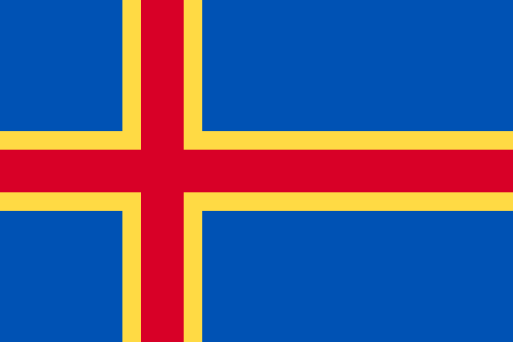 Åland Islands
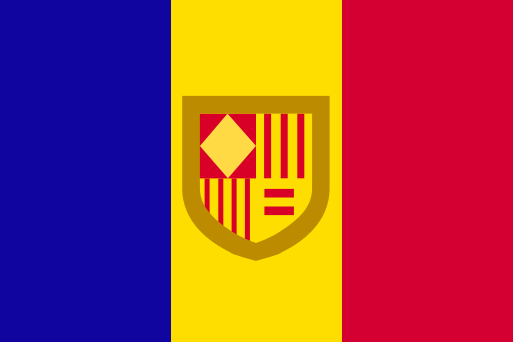 Andorra
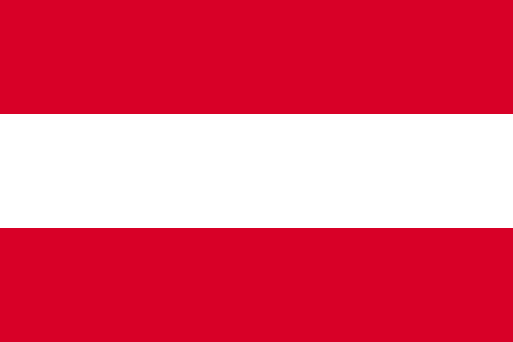 Austria
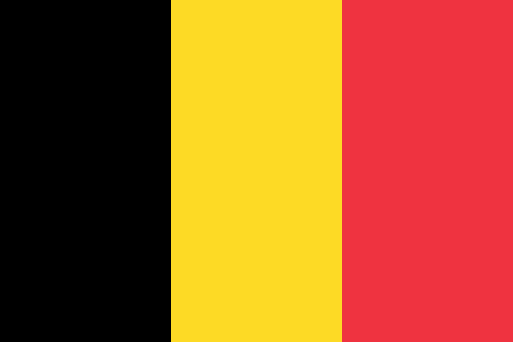 Belgium
 Croatia
 Finland
 France
 Hungary
 Italy
Italy Liechtenstein
 Lithuania
 Luxembourg
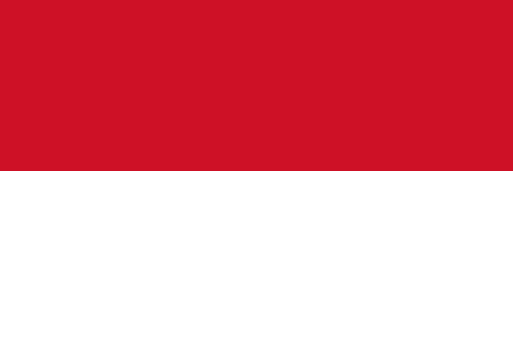 Monaco
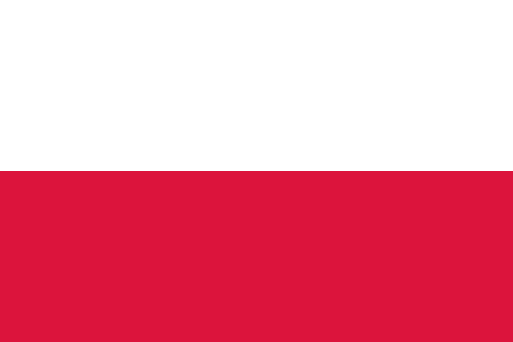 Poland
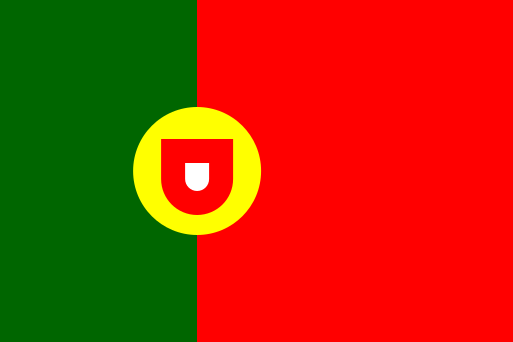 Portugal
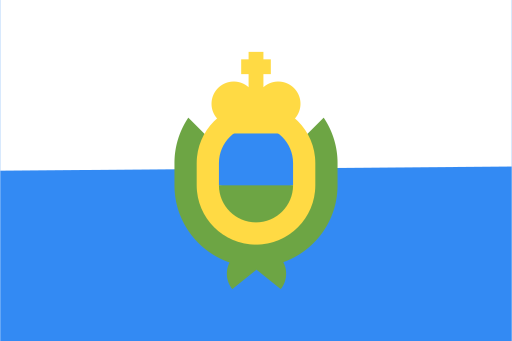 San Marino
 Slovakia
 Sweden
 Vatican City