What is Boxing Day?
Boxing Day is the day after Christmas in the United Kingdom, the Channel Islands, Gibraltar, the Isle of Man and other countries with historic ties to Britain, including Canada, Australia and New Zealand. It is a bank or public holiday, and in practice it is a day of relaxation after Christmas, with family visits, walks, sport and shopping sales. The date coincides with the Second Day of Christmas and Saint Stephen's Day used elsewhere in Europe, but the British tradition has its own distinct identity, tied to leisure, sport and shopping rather than to church services.
Football on Boxing Day is a long-standing British tradition, and horse racing is another, including the King George VI Chase at Kempton Park. In Ireland and in much of continental Europe the same date is celebrated as Saint Stephen's Day or the Second Day of Christmas, so the holiday is shared but the name and the customs differ from place to place. Some people also use the day for charity events, including fun runs and swimming events held in cold water. Visitors often find that the day feels very different from a normal public holiday.
Why it is observed
The origin of the name is not settled. One explanation is that church alms boxes, set out during Advent, were opened on the feast of Saint Stephen and the money distributed to the poor. Another links it to the custom of giving a Christmas box, a small gift of money, to servants, tradesmen and other service workers on the day after Christmas. The term is recorded in Britain by the nineteenth century, and the day became a bank holiday in the United Kingdom under the Bank Holidays Act 1871. Both explanations rest on the same idea of giving to people who had worked through the festive season.
How the date is set
Boxing Day is 26 December. If it falls on a weekend, the United Kingdom and many other countries that observe it move the day off to the next available weekday, often 27 or 28 December.
How it is observed
Many large retailers do open on Boxing Day, and it is known for post-Christmas sales, but banks, public offices and many smaller businesses close, and trains and buses run on a reduced timetable or not at all in parts of Britain. When 26 December falls on a Saturday or Sunday, a substitute holiday is generally given on the following Monday or Tuesday, which is why the site shows 28 December in some years. Pay and substitute-day entitlements depend on the country and the employment contract. Visitors planning journeys over the holiday period should check timetables in advance, since services on 26 December are often limited.
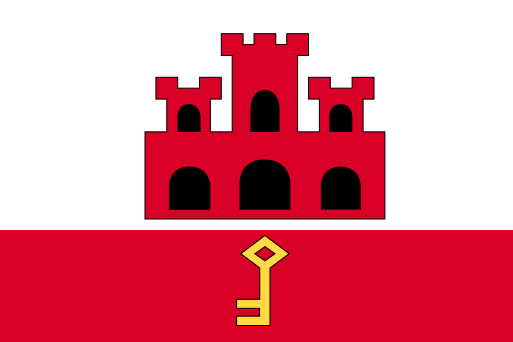 Gibraltar
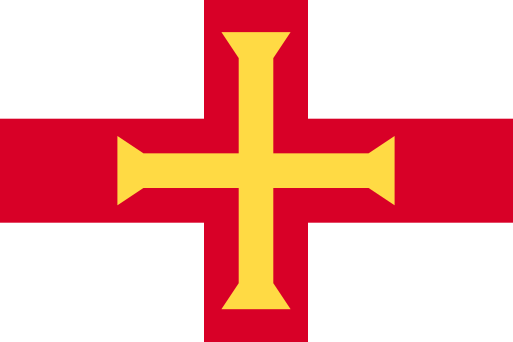 Guernsey
 Isle of Man
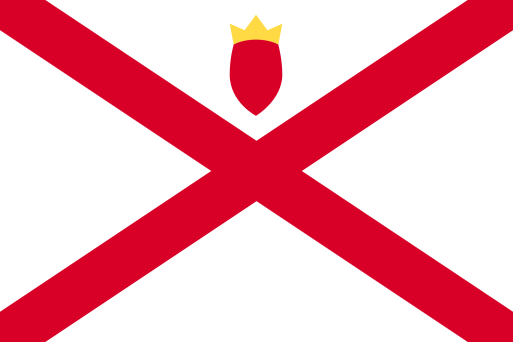 Jersey
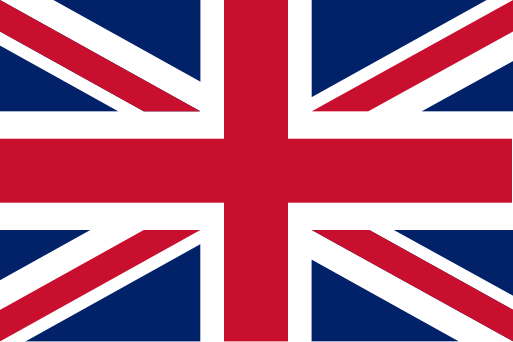 United Kingdom