What is Canada Day?
Canada Day celebrates the anniversary of Confederation on 1 July 1867, when the British North America Act, now called the Constitution Act, 1867, united the Province of Canada (divided into Ontario and Quebec), Nova Scotia and New Brunswick as a single dominion within the British Empire. It is Canada's national day. Other provinces joined later: British Columbia in 1871, Prince Edward Island in 1873 and Newfoundland, now Newfoundland and Labrador, only in 1949.
Celebrations include fireworks, concerts, parades, citizenship ceremonies and community festivals. The main event is held in Ottawa, traditionally on Parliament Hill, with a noon show and an evening programme organised by Canadian Heritage. Many Canadians wear red and white, fly the flag and spend the day at barbecues, beaches and cottages. In recent years many communities have also used the day to reflect on the history of Indigenous peoples and on reconciliation.
Why it is observed
The Constitution Act came into force on 1 July 1867. Parliament made the anniversary a statutory holiday called Dominion Day in 1879. A private member's bill renaming it Canada Day passed the House of Commons on 9 July 1982 and received Royal Assent on 27 October 1982, around the time the constitution was patriated, and the holiday was first celebrated under the new name on 1 July 1983. The date is also Memorial Day in Newfoundland and Labrador, in remembrance of the losses of the Newfoundland Regiment at the Somme on 1 July 1916, and in Quebec it is Moving Day, when many fixed-term rental leases end, a date moved from 1 May to 1 July by a 1973 law.
How the date is set
Canada Day is fixed on 1 July. When it falls on a Sunday, the statutory holiday is moved to Monday, 2 July, although celebrations usually still take place on 1 July.
How it is observed
Canada Day is a statutory holiday across Canada. Banks, government offices, schools and most shops are closed or have shorter hours, and public transport runs on a holiday timetable. Large events in city centres lead to road closures and crowded transport. In Quebec many people move house on 1 July, which busies roads and moving companies. Pay and time off depend on the province, the employer and the contract.
Sources
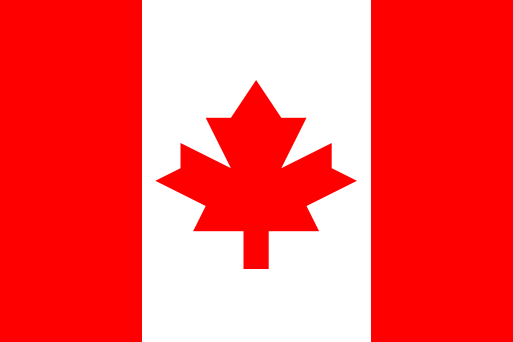 Canada