What is Dormition of the Mother of God?
The Dormition of the Mother of God, or Falling Asleep of the Theotokos, is one of the twelve great feasts of the Orthodox church year and the final feast of the church year, which begins on 1 September. It commemorates the death of Mary, the mother of Jesus, and her being taken up to her son. Orthodox icons of the feast show the apostles gathered around Mary on her deathbed, with Christ holding her soul as a small figure. The Dormition is closely related to the Catholic Assumption, which is celebrated on the same date.
The feast is preceded by a two-week fast from 1 to 14 August, in which many Orthodox believers avoid meat, dairy and fish. In Greece it is one of the most important holidays of the summer, with pilgrimages to the church of Panagia Evangelistria on Tinos and many other shrines, and with festivals called panigyria in villages. In Romania it is called Sfânta Maria Mare, and many people with the name Maria or Marian celebrate their name day. In Greek-speaking and Romanian communities, large pilgrimages also take place at monasteries, and blessings of herbs, flowers and fruits are common.
Why it is observed
The feast has been kept in the East since at least the fifth or sixth century, and it was established across the Byzantine empire by the Emperor Maurice around the year 600, according to tradition. The details of Mary's death are not in the New Testament and come from apocryphal narratives. The Orthodox emphasis is on her falling asleep and her being received by Christ, while the Catholic Church speaks of the Assumption. The two feasts are on the same date for most churches and have very similar celebrations. The date was fixed in the Byzantine calendar.
How the date is set
The Dormition is fixed on 15 August. Orthodox churches that use the Revised Julian calendar, including the churches of Greece, Cyprus and Romania, keep it on 15 August, while churches on the Julian calendar keep it on 28 August in the civil calendar.
How it is observed
The Dormition is a public holiday in Greece, Cyprus and Romania on 15 August. Shops, banks and offices are closed, and in Greece the long August weekend is the peak of domestic tourism, with ferries and roads crowded and island festivals in many places. Where the date coincides with Catholic Assumption Day, the holiday is shared with Italy, France and other Catholic countries. Pay, substitute days and employer arrangements depend on the country and the contract. It is worth booking transport and accommodation well ahead, particularly in Greece, where the holiday coincides with the peak of the tourist season.
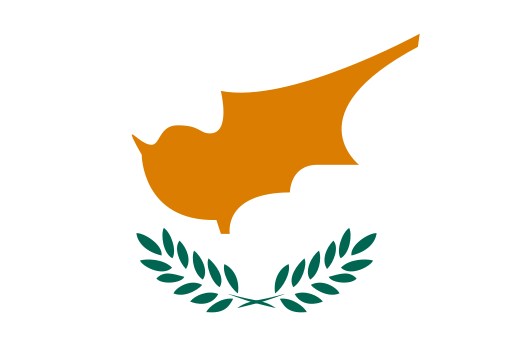 Cyprus
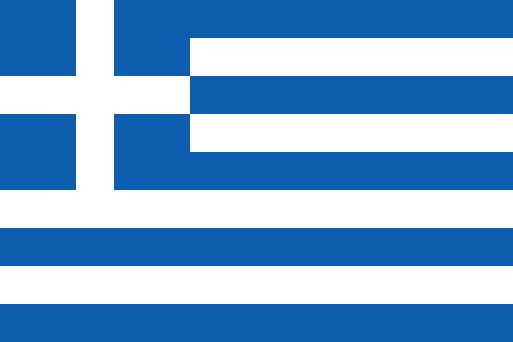 Greece
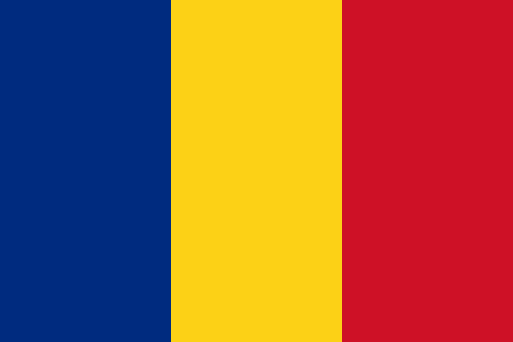 Romania