What is Freedom Day?
Freedom Day is a name used for two different national holidays among the countries on this site. In Portugal, Dia da Liberdade on 25 April commemorates the Carnation Revolution of 1974, when a military coup by young officers, supported by huge crowds, overthrew the authoritarian regime that had ruled Portugal for decades. It opened the way to democracy and to the end of the colonial wars in Africa. Both are tied to the end of an era in national history. Both holidays are about regaining a country's self-determination, in different ways.
In Malta, Freedom Day on 31 March marks the date in 1979 when the last British troops and Royal Navy units left the island under the agreement that ended the British military presence, which had lasted since the Napoleonic period. The two holidays have different tones: in Portugal, red carnations are worn and sung about, notably the song Grândola, Vila Morena, which was a signal of the revolution, while in Malta there are ceremonies and commemorations by the state. Visitors in Lisbon may see large crowds on the main avenue and hear revolutionary songs.
Why it is observed
The Carnation Revolution began in the early hours of 25 April 1974, when the radio broadcast the song Grândola, Vila Morena as the signal for the rebellion of the Armed Forces Movement, and it was largely bloodless. The carnations were handed to the soldiers by civilians, and became its symbol. Portugal made 25 April a national holiday after the revolution. Malta, independent since 1964, still hosted British forces under a defence agreement, and when it ended in 1979, the date was declared a national holiday, which marks the full withdrawal of foreign military bases.
How the date is set
The date depends on the country. In Portugal, Freedom Day is 25 April. In Malta it is 31 March. Both are fixed calendar dates.
How it is observed
Freedom Day is a public holiday in both countries on its own date. In Portugal, banks, offices and schools are closed, and large parades and street celebrations take place in Lisbon along the Avenida da Liberdade. In Malta, offices and schools are closed and official ceremonies are held in Valletta and elsewhere. Because they are fixed dates, they can fall on weekends. Pay and time off depend on national law and the contract. Check the date for the specific country. Visitors may see revolutionary songs performed in the streets of Lisbon.
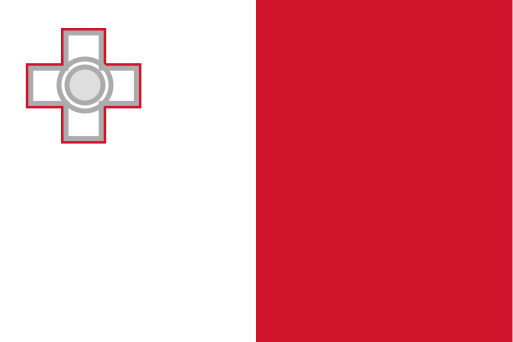 Malta
Malta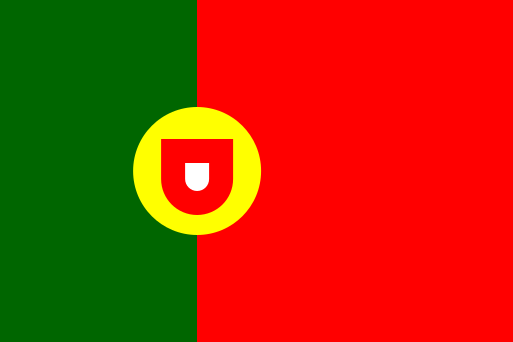 Portugal