What is Pentecost?
Pentecost, also called Whit Sunday, commemorates the descent of the Holy Spirit on the apostles fifty days after Easter, as told in chapter 2 of the Acts of the Apostles. In the account, the apostles gathered in Jerusalem heard a sound like a rushing wind, saw tongues of fire and began to speak in other languages, so that visitors from many lands could understand them. Many Christians regard the day as the birthday of the church. In the Orthodox Church the feast is also called Pentecost and is one of the twelve great feasts; its Vespers of Kneeling, held later the same day, include the first kneeling prayers since Easter.
The name comes from the Greek pentekoste, meaning fiftieth. The feast closes the Easter season, and its liturgical colour is red in the Catholic Church and many Protestant churches. The English name Whitsun is commonly explained by the white garments worn by people baptised at this season. Customs differ: in parts of Germany and elsewhere, churches and houses are decorated with fresh birch branches, and in Romania the feast, called Rusalii, is marked with green boughs in homes and churches. In Hungary it is Pünkösd and in Finland Helluntai.
Why it is observed
A festival on the fiftieth day after Easter is attested in the early church; Tertullian, writing around the year 200, already describes Pentecost as a festive season. The Greek word was also the name Greek-speaking Jews used for Shavuot, the Feast of Weeks, which falls fifty days after Passover and which Acts presents as the occasion when the apostles were gathered. Jewish tradition connects Shavuot with the giving of the Torah. Over the following centuries Pentecost became established as the close of the Easter season. In many countries the Sunday is followed by a Monday holiday, treated as a separate entry on this site.
How the date is set
Pentecost falls 49 days after Easter Sunday, the fiftieth day of Eastertide when Easter Sunday is counted as day one, so it is always a Sunday. On the Western calendar it falls between 10 May and 13 June (16 May in 2027). Orthodox churches count from Orthodox Easter, so their Pentecost is later (20 June in 2027).
How it is observed
Pentecost Sunday is a public holiday in countries that list it, including Belgium, Denmark, Estonia, Finland, Germany, Hungary, Iceland, Latvia, the Netherlands, Norway, Poland, Romania, Slovenia and Sweden. Because it always falls on a Sunday, the practical effect is mostly closed shops and church services, and the long weekend comes from the Monday where there is one. The date follows the Easter calculation of each church: in 2027 Western churches keep Pentecost on 16 May, Orthodox churches on 20 June. Pay and any substitute day depend on the country and the contract.
Sources
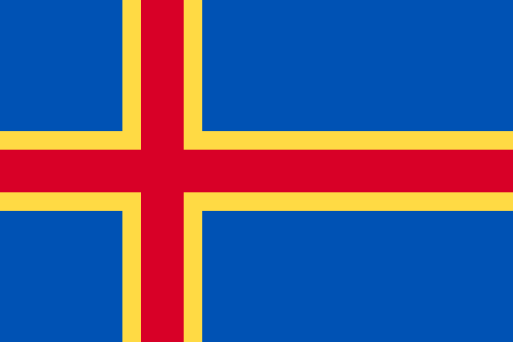 Åland Islands
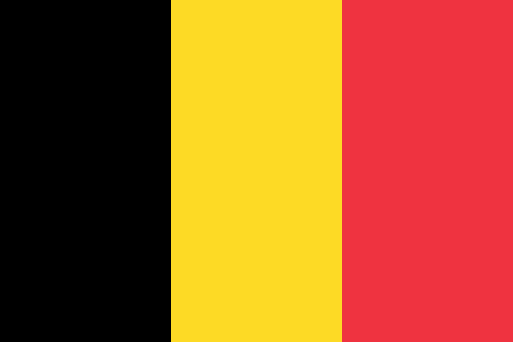 Belgium
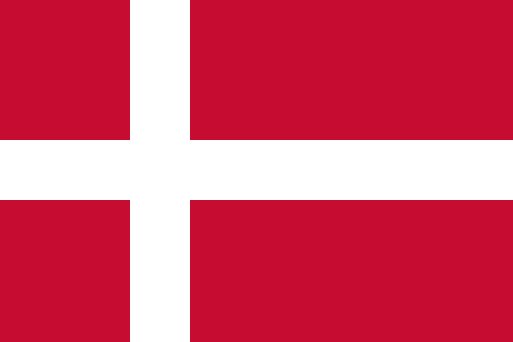 Denmark
 Estonia
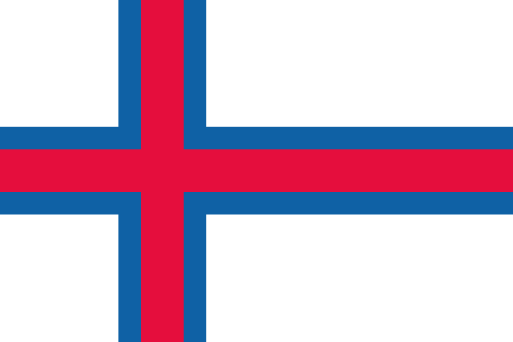 Faroe Islands
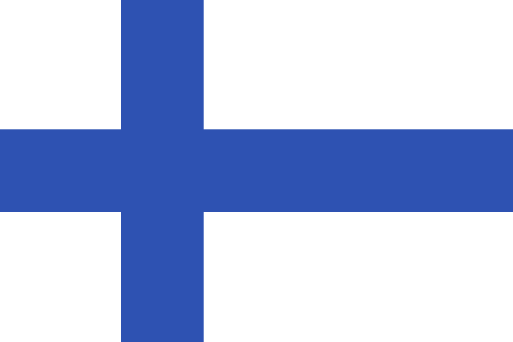 Finland
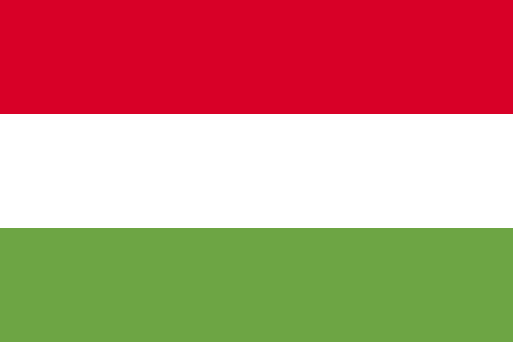 Hungary
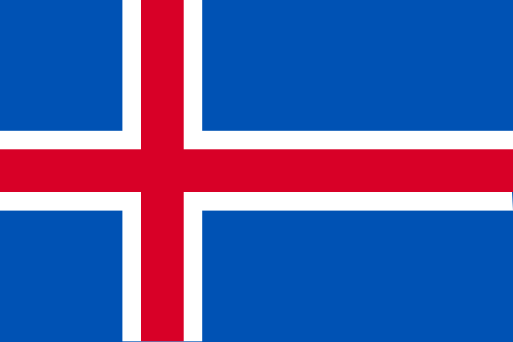 Iceland
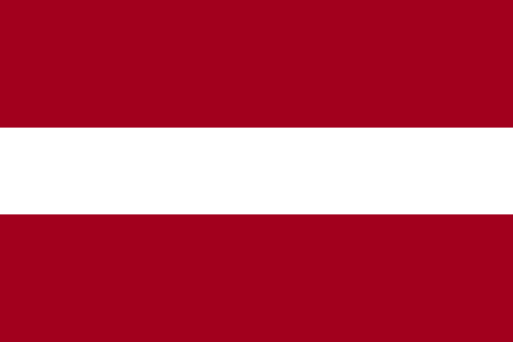 Latvia
 Liechtenstein
 Netherlands
 Norway
 Poland
 Romania
 Slovenia
 Svalbard & Jan Mayen
 Sweden