What is Saint John the Baptist?
Saint John the Baptist, the prophet who baptised Jesus in the Jordan, is remembered in the church calendar on several dates. In Western churches the main feast is the Nativity of John the Baptist on 24 June, six months before Christmas, in line with the Gospel of Luke, which says that John was born six months before Jesus. In Orthodox churches the Synaxis, or gathering, of John the Baptist on 7 January honours the one who baptised Jesus on the preceding day. The day is among the oldest in the church calendar. Saint John is also the patron saint of many cities.
In Romania, 7 January is called Sfântul Ion, a public holiday, and a major name day, since Ion, Ioan, Ioana, Ionuț and many related names are among the most common in the country. In Spain, 24 June, Sant Joan, is a regional holiday in some regions, notably Catalonia, where the night before, the Revetlla de Sant Joan, is celebrated with bonfires, fireworks and coca, a sweet flatbread. The 24 June festival is also linked to Midsummer customs elsewhere in Europe, including the Baltic states and the Nordic countries. Many families celebrate both days.
Why it is observed
The feast of John's birth on 24 June is attested in the fourth and fifth centuries, and it coincided with the older midsummer celebrations in many parts of Europe, which is why bonfires, herbs and water rituals are associated with it. John is unusual among saints because the Western church marks his birth as well as his death, which is commemorated on 29 August. The Orthodox gathering on 7 January follows the feast of the Baptism of the Lord on 6 January, and the two are linked in the liturgy, with the day after Theophany devoted to the one who baptised Jesus.
How the date is set
The name covers two feasts of the same saint on different dates. The Nativity of John the Baptist is fixed on 24 June in the Western calendar, while the Orthodox Synaxis of John the Baptist is fixed on 7 January, the day after Epiphany or Theophany. Romania's holiday is on 7 January.
How it is observed
In Romania, 7 January is a public holiday, which comes immediately after Epiphany on 6 January, so there is a long winter break from Christmas to early January. Banks, offices and schools close. In Spain, 24 June is a regional or local holiday in some regions, Catalonia for example, and many shops and offices close there. Check the holiday for your region. Pay and time off depend on national law, the region and the contract. Check the specific day for your region. Visitors should plan for busy beaches and fireworks in Catalonia.
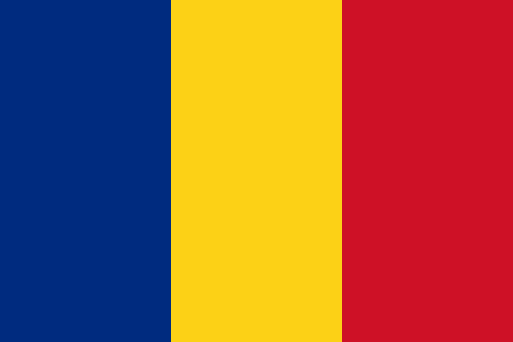 Romania