What is Victory Day?
Victory Day refers to different anniversaries, most of them linked to the end of the Second World War in Europe. In France it is 8 May, the anniversary of the German surrender in 1945, and in the Czech Republic the same date is called the Day of Victory. In Russia and Belarus it is 9 May, because the German act of surrender entered into force late on 8 May by Central European time, which was already 9 May in Moscow. Each country has its own wording and its own set of customs.
In Estonia, Victory Day is 23 June and commemorates the victory at the Battle of Võnnu, also called the Battle of Cēsis, in 1919, during the Estonian War of Independence. In Turkey, Victory Day, called Zafer Bayramı, is on 30 August and marks the decisive Battle of Dumlupınar in 1922 in the Turkish War of Independence. These holidays differ in tone, from solemn wreath-laying to large military parades. Visitors should note that the same name can carry very different emotional weight in different countries. These are only examples. In Estonia, 23 June also coincides with Midsummer Eve, so the Victory Day events are followed by the evening bonfires.
Why it is observed
The Second World War victory celebrations date from the immediate postwar years. The Soviet Union first celebrated 9 May in 1945, and the day was made a national holiday in 1965 and later became central to Russia's civic life. Western European countries marked 8 May at different times: France made 8 May a public holiday again in 1981, after it had been dropped as a day off in the 1970s. The Estonian and Turkish holidays commemorate other wars, which shows that the name is used wherever a state wants to remember a decisive military success.
How the date is set
There is no single date. Victory Day is a generic name for the anniversary of a military victory, and the date and event depend on the country. The best-known examples commemorate the end of the Second World War in Europe on 8 or 9 May 1945.
How it is observed
Where Victory Day is a public holiday, banks, offices and schools close and there are ceremonies, wreath-laying, and in some countries parades and fireworks, which can mean road closures in capitals. In some places 8 or 9 May is also combined with other observances such as Europe Day. The practical effects depend on the country, so check the specific holiday page. Pay and time off depend on national law and the contract. Check the country page for details. In Russia and Belarus the military parade is held in the capital, and roads in the centre are closed for the day, with a large public gathering in the evening.
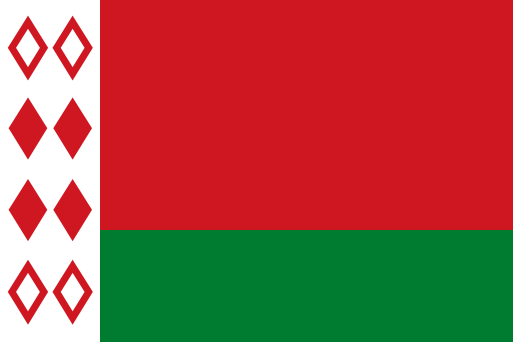 Belarus
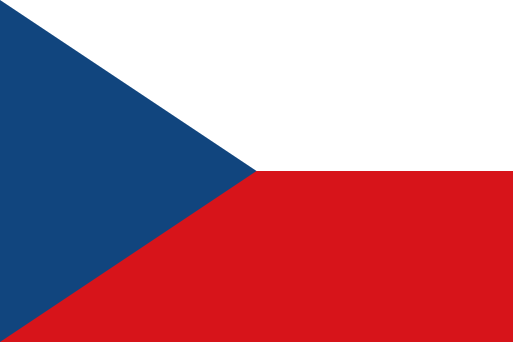 Czechia
 Estonia
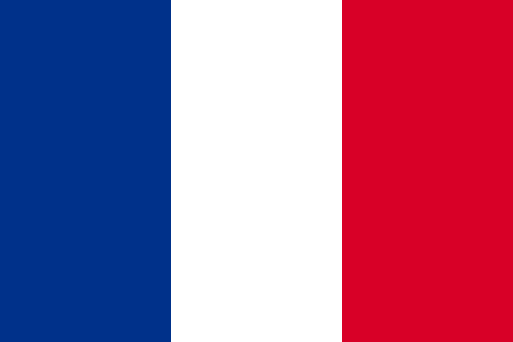 France
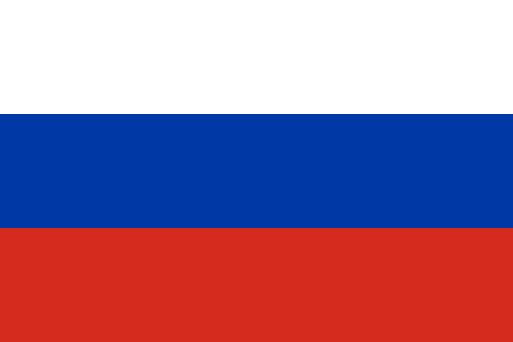 Russia
 Türkiye