What is Statehood Day?
Statehood Day is the name given to several national holidays in Central and Southeastern Europe. In the Czech Republic it falls on 28 September, which is also the feast of Saint Wenceslas, the tenth-century duke honoured as a patron of the Czech lands. In Croatia it is 30 May, which commemorates the first multiparty parliament in 1990, and in Slovenia it is 25 June, the anniversary of the 1991 declaration of independence. Czechs also use the day for pilgrimages to Stará Boleslav, where Wenceslas is said to have been killed in the 930s.
In Lithuania, Statehood Day is 6 July and commemorates the coronation of Mindaugas as king in 1253, which is taken as the founding of the Lithuanian state. Serbia celebrates it on 15 February, marking the first uprising against Ottoman rule in 1804 and the first constitution of 1835, and Montenegro observes it on 13 July, linked to the 1878 recognition of the country at the Congress of Berlin and to the 1941 uprising. In Croatia, the day also remembers the first free elections. Many of these countries also have a separate Independence Day, so the two should not be confused.
Why it is observed
The holidays share a purpose: to connect the modern state with a long tradition of statehood. In the Czech case, the date was made a state holiday by law in 2000 and links the modern republic to the medieval Přemyslid dynasty, of which Wenceslas was a member. Slovenia's day links to the breakaway from Yugoslavia in 1991, and Lithuania's looks back to the thirteenth century. The varied dates show how differently each nation chooses its own foundation story. The choice of date often involved political debate about which moment best represents the beginning of the nation.
How the date is set
There is no single date. Statehood Day is a generic name for a day that celebrates the founding or continuity of a country as a state, and the date and the event behind it depend on the country. Most are fixed calendar dates.
How it is observed
Where Statehood Day is a public holiday, banks, offices and schools are closed, and there are official ceremonies, wreath-laying, concerts and in some countries military displays. Dates are fixed, though some countries move or adapt the holiday when it falls on a weekend. Because the meaning differs from country to country, visitors should check the specific holiday page. Pay and time off depend on national law and the contract. Check the country page. Because several countries on this site share the same holiday name, check the country page for the exact date and for any extra days that might be linked to it, such as a bridge day between the holiday and a weekend.
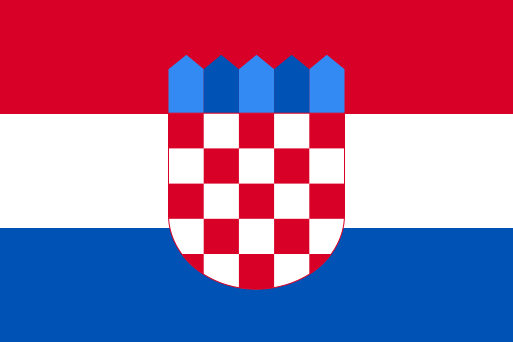 Croatia
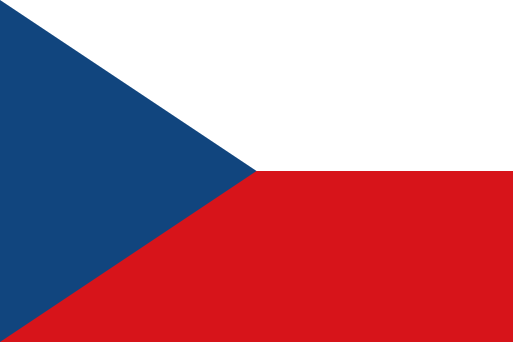 Czechia
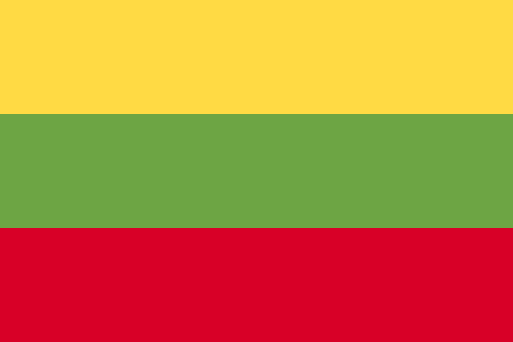 Lithuania
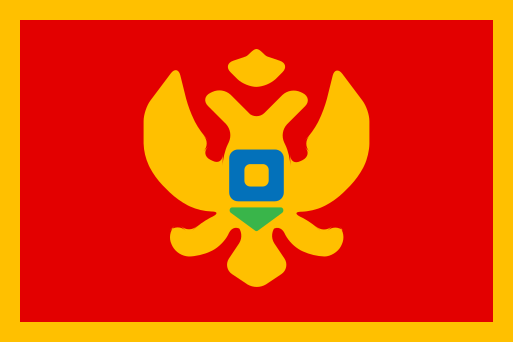 Montenegro
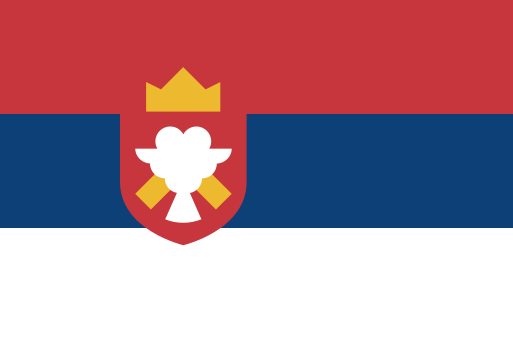 Serbia
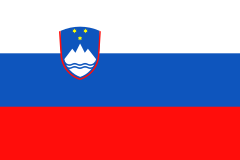 Slovenia